
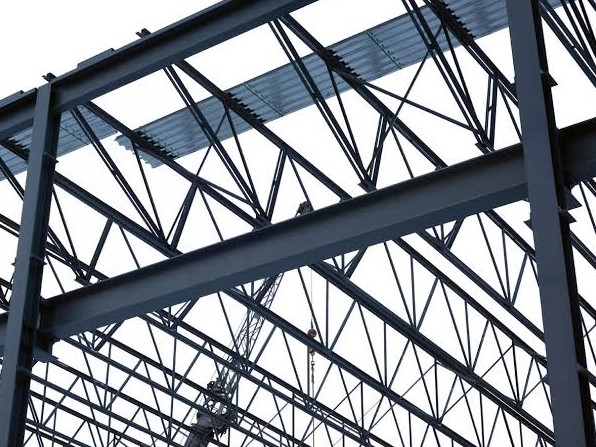
A structural steel frame is only as strong as the connections holding it together. Steel Connection Detailing Australia services from Matrix Steel Solutions give fabricators, engineers, and contractors the connection design, shop drawings, and 3D models needed to build safe, code-compliant, buildable steel joints — every time, without on-site guesswork.
From moment connections on a high-rise in Sydney to base plates on a pre-engineered warehouse in Perth, our detailing team handles the part of steel construction where most costly errors actually happen: the connection.
Why Connection Detailing Deserves Its Own Focus
Most steel detailing conversations focus on the overall frame — beams, columns, and the general 3D model. But connections are where design intent, fabrication tolerance, and site erection all have to line up perfectly. A poorly detailed connection can mean a bolt group that doesn't fit, a weld that can't physically be run in the field, or a moment connection that doesn't actually transfer load the way the engineer intended.
Structural Steel Connection Design Australia work has to account for local fabrication practices, standard bolt and plate availability, and the specific load paths of each joint — not just a generic connection template dropped into a 3D model. That's the gap our connection detailing service is built to close.
Our Steel Connection Detailing Services in Australia
Connection Design and Engineering
Shear, moment, seated, splice, and base plate connections are engineered to suit the actual loads and framing geometry of your project, not just standard details applied without review.
Connection Drawings for Fabrication
Connection Drawings Australia projects need are produced with complete dimensions, bolt patterns, weld symbols, and material grades — ready for the shop floor without follow-up questions.
Steel Connection Shop Drawings
Our Steel Connection Shop Drawings show every plate, bolt, and weld at the piece level, so fabricators can cut, drill, and assemble with confidence and minimal rework.
3D Connection Modeling
Using Tekla Connection Detailing workflows, we model every joint in 3D to catch clashes and fit issues before steel is ever cut, coordinating against architectural and MEP models where required.
Base Plate and Anchor Bolt Layouts
Anchor bolt setting plans are detailed to match foundation drawings exactly, reducing the risk of misaligned columns during erection.
Standards-Compliant Detailing
All connection detailing follows AS/NZS Steel Connection Detailing requirements, so drawings are ready for engineer sign-off and building approval without rework cycles.
Software We Use for Connection Detailing
-
Tekla Structures — full 3D connection modeling, clash detection, and automated shop drawing generation
-
AutoCAD — 2D connection detail drawings for smaller or traditional fabrication shops
-
IDEA StatiCa — connection design verification for complex or non-standard joints
-
Navisworks — multi-trade coordination to catch connection clashes with MEP and architectural elements early
Deliverables are provided in the formats Australian fabricators already use — DWG, PDF, DXF, and IFC.
Our Connection Detailing Workflow
-
Scope and Load Review — We review structural drawings, load data, and connection schedules provided by the engineer of record.
-
Connection Design — Each joint type is designed or verified against AS/NZS 5100 and AS 4100 provisions, matched to standard fabrication practices.
-
3D Modeling — Connections are modeled in Tekla, checked against member geometry for fit and clash issues.
-
Shop Drawing Production — Detailed connection drawings are generated with full bolt, weld, and plate callouts.
-
Internal QA Review — Senior detailers check every connection drawing against the design and AS/NZS standards before delivery.
-
Client Review and Delivery — Markups are incorporated quickly, and final fabrication-ready files are delivered in your preferred format.
Industries That Rely on Our Connection Detailing
-
Commercial Buildings — moment and shear connections for office towers and mixed-use developments
-
Industrial Facilities — heavy-duty connections for plants, refineries, and processing structures
-
Infrastructure — bridge and platform connections detailed to AS/NZS 5100 bridge design standards
-
Pre-Engineered Buildings — standardised, repeatable connection details for warehouses and distribution centres
-
Residential and Multi-Storey Developments — framing connections for steel-framed apartments and townhomes
Built on Australian and International Standards
-
AS 4100 — Steel Structures code for connection design in Australia
-
AS/NZS 5100 — Bridge design standards for structural steel connections
-
AS/NZS 1554 — Structural steel welding standards
-
Where projects require it, our team can also detail to AISC Steel Connection Detailing standards for fabricators working on cross-border or U.S.-linked projects
This standards-first approach means fewer RFIs, faster engineer sign-off, and connection drawings your fabrication shop can trust as issued.
Common Connection Detailing Challenges We Solve
-
Non-standard or complex joints — verified using IDEA StatiCa alongside Tekla modeling to confirm capacity before fabrication.
-
Clashes with other trades — caught early through Navisworks coordination against MEP and architectural layouts.
-
Tight design timelines — preliminary connection modeling starts with partial structural information and updates as final loads are confirmed.
-
Multi-standard projects — connections detailed to AS/NZS by default, with AISC or CISC equivalency available for projects spanning multiple countries.
What Fabricators, Engineers, and Contractors Get
Fabricators get bolt-accurate connection drawings and clean shop packages that reduce floor-level questions and rework.
Structural Engineers get connection designs that reflect their intended load path accurately, with fit and clash issues flagged before fabrication.
Contractors get erection-ready connection details that reduce site delays caused by misaligned bolt groups or unbuildable joints.
Frequently Asked Questions
Do you design connections or only detail drawings for connections already engineered?
Both. We can detail connections designed by your engineer of record, or provide full connection design and engineering as part of the detailing package.
What standards do you detail connections to in Australia?
All connection detailing follows AS 4100, AS/NZS 5100 for bridge work, and AS/NZS 1554 for welding, unless a project specifies otherwise.
Can you provide 3D Tekla models alongside 2D connection drawings?
Yes. We produce full 3D connection models in Tekla Structures along with 2D shop and erection drawings generated directly from the model.
Do you handle non-standard or complex connections?
Yes. Complex or non-standard joints are verified using IDEA StatiCa alongside 3D modeling to confirm they meet design capacity before drawings are issued.
What file formats do you deliver?
DWG, PDF, DXF, and IFC, matched to what your fabrication shop and design team already use.
Can you detail connections to AISC or CISC standards as well?
Yes, for projects that span multiple countries or fabricators working to U.S. or Canadian specifications, we can detail connections to AISC or CISC standards alongside AS/NZS.
How long does connection detailing typically take?
Turnaround depends on project size and connection complexity — a typical mid-size commercial project's connection package is delivered within 2 to 3 weeks, with faster turnaround available for urgent projects.
Get Started With a Reliable Connection Detailing Partner
If your project needs dependable Steel Connection Detailing Australia services, Matrix Steel Solutions offers the accuracy, AS/NZS compliance, and communication your fabrication and erection schedule depends on.
Send us your project details today and get a free quote within 24 hours.