
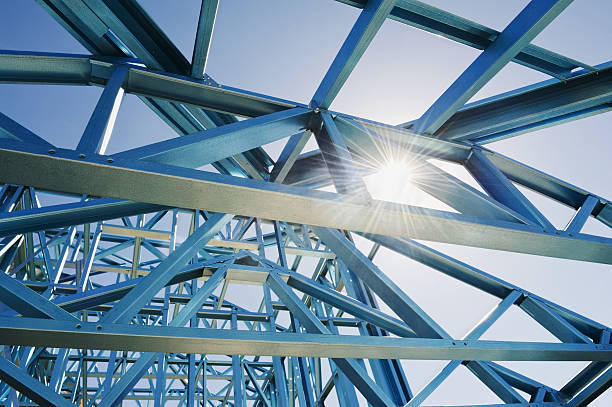
Every structural steel project — whether it's a 20-story office tower in Chicago, a distribution warehouse in Ohio, or a pedestrian bridge in California — depends on one thing above all else: the integrity of the steel itself. Design drawings can be flawless, engineering calculations can be precise to the decimal point, but if the fabricator turning that design into physical steel doesn't have the systems, training, and quality controls to execute it correctly, the entire project is at risk.
This is exactly why AISC Certified Fabricators have become the industry benchmark for structural steel projects across the United States. Owners, general contractors, engineers, and building officials increasingly require AISC certification as a non-negotiable qualifying criterion before a fabricator is even allowed to bid on a job. It isn't a marketing badge — it's a rigorous, audited quality assurance program administered by the American Institute of Steel Construction (AISC) that verifies a fabricator's people, processes, and facilities meet defined standards of competence.
In this guide, we'll break down what AISC certification actually means, the tangible benefits of AISC certification for owners and contractors, how certified structural steel fabricators differ from uncertified shops, and why partnering with a certified fabricator — supported by precise, code-compliant detailing — is one of the smartest decisions you can make for your next steel project.
What Is AISC Certification, Exactly?
The American Institute of Steel Construction (AISC) is the leading standards body for structural steel design, fabrication, and erection in North America. Its certification program audits fabrication and erection companies against documented quality criteria covering:
-
Management responsibility and organizational structure
-
Contract review and engineering interface
-
Document and drawing control
-
Material control and traceability
-
Fabrication processes, including cutting, fitting, and welding
-
Welding personnel qualification and procedure control
-
Nonconformance and corrective action systems
-
Internal audits and continuous improvement
Fabricators don't self-certify. They undergo an on-site audit by AISC-approved auditors, and certification must be renewed periodically, with surveillance audits in between. This means AISC Certified Fabricators are held to a documented, externally verified standard — not an internal claim of quality.
Certification is also categorized by project complexity. A fabricator may be certified for simple steel structures, or for more advanced categories that include major bridges, seismic-force-resisting systems, fracture-critical members, or fatigue-sensitive components. This tiered structure means the certification a fabricator holds should always match the technical demands of your specific project.
Why AISC Certification Matters More Than Ever
Structural steel projects today face tighter schedules, stricter code enforcement, and higher owner expectations than a decade ago. Building departments in many jurisdictions now require AISC certification as a condition of permit approval, and many public agencies and GCs will not accept a bid from an uncertified shop at all. Here's why the standard has become so central to the industry.
1. Codes and Building Officials Increasingly Demand It
Many state and municipal building codes, along with the International Building Code (IBC), reference AISC certification directly as a path to satisfying special inspection and quality assurance requirements. When a fabricator holds current AISC certification, building officials can reduce or waive certain fabrication shop inspections, because the certification itself serves as documented proof of quality control. For uncertified fabricators, this often means additional third-party inspection costs and schedule delays.
2. Project Risk Is Concentrated in Fabrication
Design errors can usually be caught and corrected on paper. Fabrication errors — a missed weld, an incorrect bolt hole, mismatched camber — are far more expensive to fix once steel has left the shop. AISC certification exists specifically to reduce this risk by mandating documented process controls at every stage of fabrication.
3. Owners and Lenders Want Assurance
Insurance carriers, lenders, and property owners are increasingly aware that certified fabrication reduces liability exposure. A steel frame is often the single most safety-critical system in a building, and stakeholders want documented proof that it was produced under audited quality management — not simply "good workmanship" on faith.
Benefits of AISC Certification for Your Project
Choosing a certified fabricator isn't just about checking a compliance box. The benefits of AISC certification flow through every phase of a project, from bidding to occupancy.
Documented Quality Management, Not Just Good Intentions
Certified fabricators operate under a written quality manual covering every stage of production. That means consistent processes regardless of which shift, crew, or shop is producing the steel — critical for large or multi-location projects.
Reduced RFIs and Field Rework
Because certified shops maintain strict document control and material traceability, errors that would normally surface as costly field RFIs are caught earlier — during shop drawing review, material receipt, or in-process inspection.
Faster Permitting and Inspection Pathways
As noted above, many jurisdictions streamline special inspection requirements for AISC-certified shops, which can shave real time off your project schedule and reduce third-party inspection costs.
Welder and Personnel Qualification You Can Verify
AISC certification requires documented welder qualification records tied to AWS D1.1 procedures. This isn't just "our welders are experienced" — it's a paper trail proving every welder working on your structural connections is qualified for the specific process and position used.
Material Traceability From Mill to Member
Certified fabricators maintain chain-of-custody documentation for steel material, so if a question ever arises about mill certification, heat number, or material grade, the answer is available — not guessed at.
Stronger Position for Bidding and Financing
Projects specified with AISC-certified fabrication are viewed more favorably by lenders, insurers, and public agencies, which can translate into smoother approvals and fewer contractual disputes down the line.
Lower Long-Term Liability Exposure
A documented quality system reduces the chance of latent defects surfacing years after occupancy — protecting owners, engineers of record, and general contractors alike from costly forensic investigations and litigation.
Certified Structural Steel Fabricators vs. Uncertified Shops
It's worth being direct about the practical difference in day-to-day project execution.
|
Factor |
AISC Certified Fabricator |
Uncertified Fabricator |
|
Quality system |
Documented, audited quality manual |
Often informal, undocumented |
|
Welder qualification records |
Maintained and available for review |
May not be systematically tracked |
|
Material traceability |
Mill-to-member documentation |
Inconsistent or absent |
|
Inspection requirements |
Often reduced per code/AHJ |
Typically full third-party inspection required |
|
Nonconformance handling |
Formal corrective action process |
Ad hoc, inconsistent |
|
Bid eligibility on public/institutional work |
Frequently required |
Frequently disqualified |
|
Owner/lender confidence |
High — externally verified |
Lower — self-reported only |
This isn't to say every uncertified fabricator produces poor steel — many are skilled, reliable shops. But without third-party audited certification, a project owner has no independent verification of that quality, which is exactly the gap AISC certification is designed to close.
Quality Steel Fabrication Starts Long Before the Shop Floor
One point that often gets overlooked is that quality steel fabrication isn't only a shop-floor discipline — it starts with the accuracy of the shop drawings and connection details the fabricator is working from. Even a fully AISC-certified shop can only fabricate as precisely as the drawings they're given allow.
This is where structural steel detailing plays a direct role in supporting AISC quality standards. Accurate shop drawings, erection drawings, and connection details — modeled to AISC's Code of Standard Practice — give certified fabricators exactly what they need to execute their quality processes without ambiguity. Detailing errors, missing bolt information, or unresolved clashes force fabricators to make field judgment calls, which undermines the very consistency that certification is meant to guarantee.
At Matrix Steel Solutions, this is the layer we focus on. We provide AISC-compliant structural steel detailing — shop drawings, erection drawings, connection detailing, and BIM coordination — engineered specifically to support certified fabricators in delivering fabrication-ready, error-free steel. When detailing and fabrication both operate under AISC discipline, projects move faster with dramatically fewer surprises.
AISC Quality Standards: What They Actually Cover
For those evaluating a fabricator's certification, it helps to understand the scope of what AISC quality standards actually audit:
-
Contract Review — Verifying that engineering requirements, codes, and specifications are captured and communicated internally before fabrication begins.
-
Design and Engineering Interface — Ensuring connection design responsibilities are clearly defined and documented between EOR, detailer, and fabricator.
-
Drawing and Document Control — Formal systems to manage drawing revisions, approvals, and distribution so the shop never fabricates from outdated information.
-
Material Control — Receiving inspection, storage, identification, and traceability of raw steel material.
-
Fabrication Process Control — Documented procedures for cutting, punching, drilling, fitting, and assembly.
-
Welding — Qualified welding procedure specifications (WPS), qualified welders, and in-process inspection aligned with AWS D1.1.
-
Coating and Surface Preparation — Controlled processes for shop primer, galvanizing, or fireproofing preparation where applicable.
-
Nonconformance and Corrective Action — A formal system for identifying, documenting, and resolving quality issues before steel ships.
-
Internal Audit Program — Ongoing self-assessment to maintain certification standards between AISC surveillance audits.
Understanding this scope helps owners and GCs ask sharper questions during fabricator selection — rather than simply confirming "yes, we're certified."
How to Verify a Fabricator's AISC Certification
Before awarding a contract, it's worth confirming certification directly rather than relying on a claim in a proposal:
-
Ask for the specific certification categories held (e.g., Structural Steel Buildings, Bridges, Sophisticated Paint Endorsement, Fracture Critical) and confirm they match your project's technical demands.
-
Request the certificate number and verify it through AISC's public certification directory.
-
Confirm the certification is current — not expired or under a lapsed renewal.
-
Ask about any past nonconformance findings and how they were resolved.
A reputable, certified fabricator will have no hesitation providing this information — transparency is itself a signal of quality culture.
What This Means for General Contractors and Owners
If you're a general contractor, owner, or developer scoping a structural steel package, here's the practical takeaway: specifying an AISC-certified fabricator in your bid documents isn't excessive caution — it's risk management. It:
-
Reduces the likelihood of costly field rework and schedule slippage
-
Simplifies special inspection requirements in many jurisdictions
-
Gives your project a documented quality trail that protects you if disputes arise later
-
Signals to lenders, insurers, and future buyers that the structure was built to a verifiable standard
For structural engineers, working with certified fabricators — supported by disciplined, AISC-aligned detailing — means design intent is far more likely to be executed exactly as engineered, with fewer RFIs disrupting the schedule.
Frequently Asked Questions
Q1. Is AISC certification legally required to fabricate structural steel?
Not universally, but many state and local codes, along with public agency and institutional owners, require it as a condition of bid eligibility or as a pathway to reduced special inspection requirements.
Q2. How long does AISC certification last?
Certification typically requires renewal audits on a recurring cycle, along with surveillance audits in between, to ensure ongoing compliance rather than a one-time check.
Q3. Does AISC certification cover erection as well as fabrication?
AISC offers separate certification programs for erectors, so it's worth confirming whether your erector — not just your fabricator — holds relevant certification for your project scope.
Q4. Does hiring a certified fabricator cost more?
Certified fabricators may price their documented quality systems into their bids, but the reduction in RFIs, rework, and inspection delays frequently offsets this over the life of the project.
Q5. How does detailing quality affect a certified fabricator's performance?
Even the best quality system can't compensate for inaccurate or incomplete shop drawings. AISC-compliant, coordinated detailing is a critical input that lets certified fabricators execute their process controls without guesswork.
Final Thoughts: Certification Is a Risk-Reduction Strategy, Not a Formality
Choosing an AISC Certified Fabricator isn't about paperwork for its own sake — it's about putting a verified, audited quality system between your project and the risks that come with structural steel work: safety liability, schedule delays, field rework, and long-term defect exposure. Pairing that certified fabrication with precise, AISC-aligned structural steel detailing closes the loop, ensuring that what gets designed, detailed, and fabricated all line up exactly as intended.
If you're planning a structural steel project and want detailing that's built to support certified fabricators and AISC quality standards from day one, Matrix Steel Solutions is ready to help — with shop drawings, erection drawings, connection detailing, and BIM coordination engineered for accuracy, speed, and full AISC compliance.