5 Myths About Offshore Steel Detailing That US Fabricators Still Believe
5 Myths About Offshore Steel Detailing That US Fabricators Still Believe
I have had hundreds of conversations with US fabricators about offshore steel detailing. In those conversations, I hear the same concerns come up over and over again. Some are valid questions worth taking seriously. Others are myths — beliefs that get passed around the industry without much evidence behind them.
I want to address the five most common ones directly. Not to sell you anything, but because I think US fabricators deserve an honest picture of what offshore detailing actually looks like in practice.
Myth 1: "The Quality Will Be Poor"
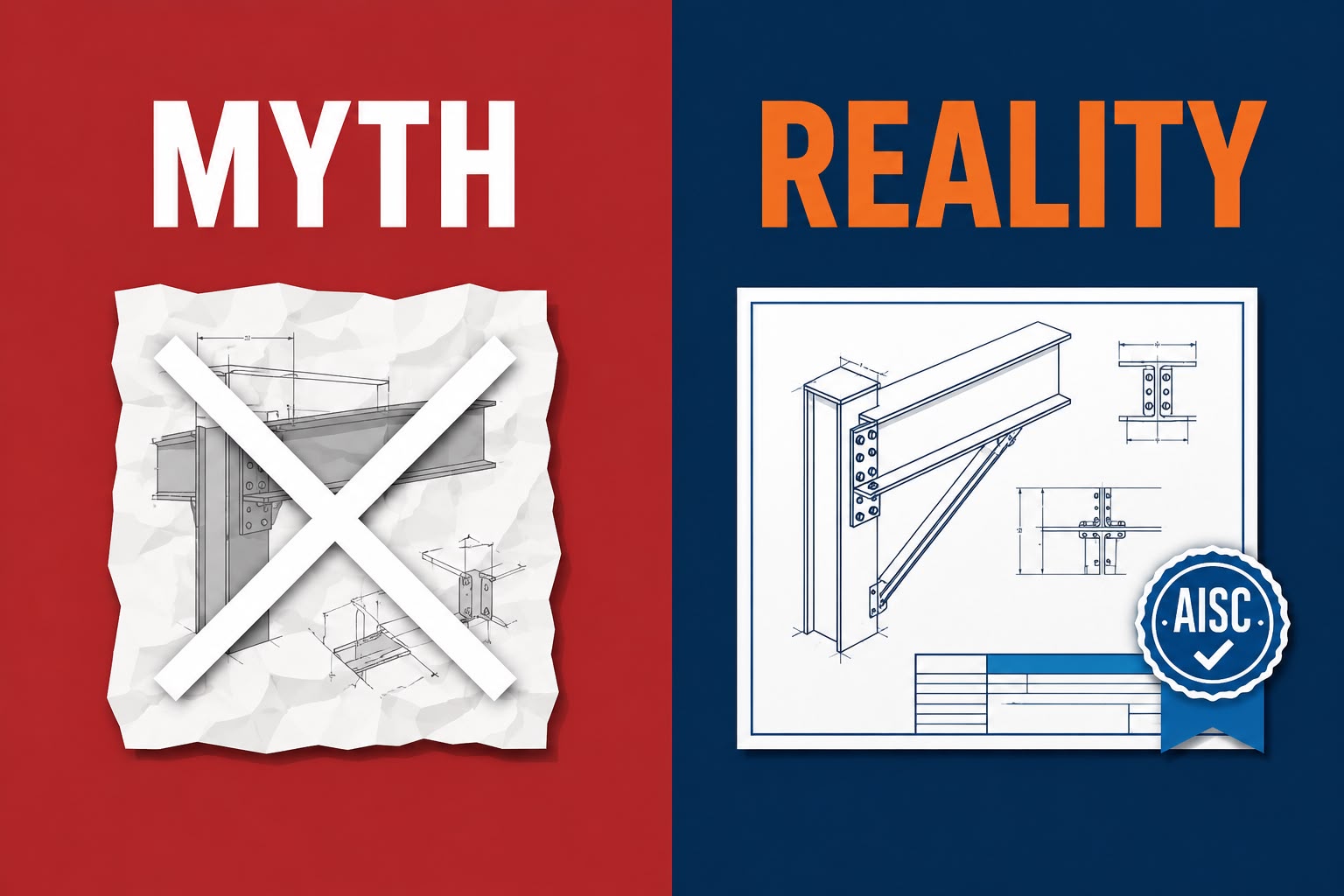
This is the most common concern I hear, and I understand where it comes from. There have been offshore detailing firms that delivered poor-quality work, and those experiences stick in people's memories.
But quality is not a function of geography. It is a function of the firm's experience, their QC process, and their familiarity with the applicable standard. A US-based detailing firm with weak QC will produce poor drawings. An offshore firm with an experienced team and a rigorous two-stage review process will produce excellent drawings.
The question to ask is not where the firm is located. It is: what is their quality control process, and can they show me sample drawings from AISC projects? Any firm — onshore or offshore — that cannot answer those questions clearly should not be handling your shop drawings.
Quality comes from process, not postcode.
Myth 2: "The Time Zone Difference Makes It Impossible to Communicate"
India is 9.5 to 12.5 hours ahead of the US, depending on your time zone. That is a real gap. But I have been working with US fabricators across this time difference for years, and it has never once been the reason a project failed.
Structured communication eliminates the time zone problem. We send daily update emails. We use shared RFI logs. We have defined response windows. And for fabricators who need real-time conversation, we schedule a brief morning overlap — your morning, our evening — for anything that needs immediate discussion.
The time zone difference actually works in your favour when communication is set up correctly. You send review comments at the end of your day. We work through the night. You arrive the next morning to revised drawings. That is not a disadvantage — that is a production advantage.
Myth 3: "You Cannot Trust Them With Your Project Files"
I hear this occasionally and I take it seriously, because project files are confidential. Structural drawings contain proprietary design information, and fabricators are right to think carefully about who they share them with.
The answer is that professional offshore detailing firms operate under confidentiality agreements, the same as any US-based subcontractor. Before we receive any project documents, we sign an NDA. Our systems are password-protected. Files are not shared with third parties under any circumstances.
The standard of data security at a professional offshore detailing firm is no different from what you would expect from any engineering subcontractor. If a firm cannot provide a clear confidentiality agreement upfront, do not work with them — onshore or offshore.
Myth 4: "Offshore Detailers Do Not Understand AISC"
This one genuinely surprises me, because the evidence points the other way. India produces a large volume of engineering professionals who specialize in structural steel detailing. Many of the most experienced Tekla and AISC-trained detailers in the world are based in India.
At our firm, we have delivered AISC-governed projects for US fabricators for years. Our detailers know AISC 303, AISC 360, standard connection tables, and US drawing conventions. We have delivered projects across Texas, the Midwest, the Southeast, and the Northeast — commercial buildings, industrial structures, warehouses, and educational facilities.
The right question is not whether offshore detailers can understand AISC. It is whether this specific firm has the experience and samples to prove it. Ask for them. Any credible firm will have them ready.
Myth 5: "It Is Only Worth It for Large Projects"
This is probably the myth that costs fabricators the most money, because it stops smaller shops from accessing offshore support they could genuinely benefit from.
Offshore detailing is not only viable at scale. A project with 30-50 assemblies is a perfectly reasonable scope to outsource. The cost savings are proportional regardless of size, and the turnaround advantage applies to small projects just as much as large ones.
In fact, smaller projects often benefit more from outsourcing, because they do not justify the overhead of a full-time in-house detailer. A small fab shop that outsources detailing on a project-by-project basis gets professional Tekla output at a fraction of the cost of maintaining in-house capacity they cannot keep busy year-round.
The Bottom Line
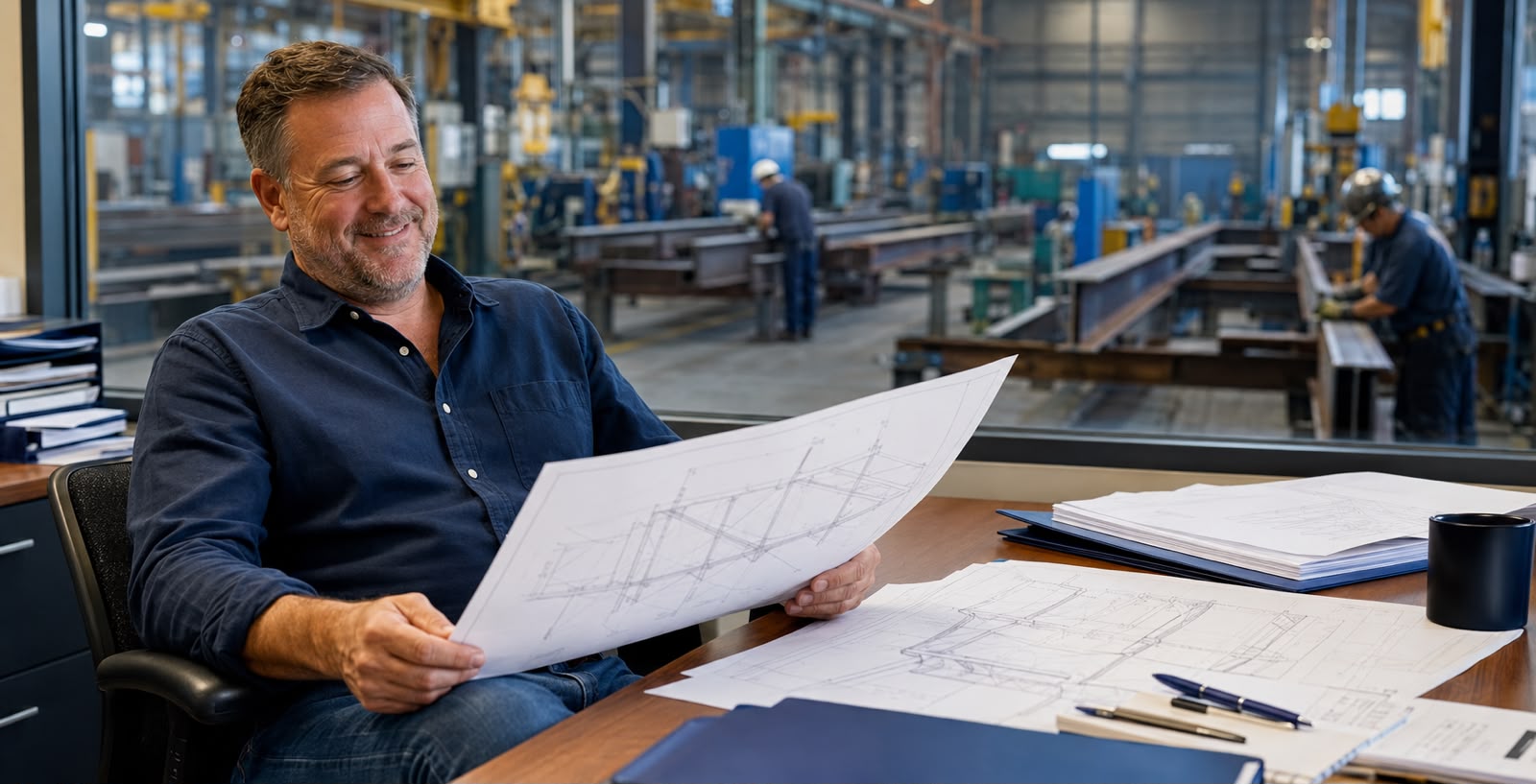
Offshore steel detailing is not right for every fabricator or every project. But the reasons to avoid it should be based on fact, not on myths that have been repeated so many times they feel like common knowledge.
If you have questions about what working with an offshore detailing partner actually looks like in practice, I am happy to talk through it. The best way to evaluate whether it is right for your shop is to run a trial project and judge the output for yourself.
Skeptical? Good. Request a free sample drawing package from Matrix Steel Solutions and judge the AISC quality for yourself. Email info@matrixsteelsolutions.org or visit matrixsteelsolutions.org/free_shop_drawing_sample