
In-House Steel Detailing vs Outsourcing: Which is Right for Your Fab Shop?
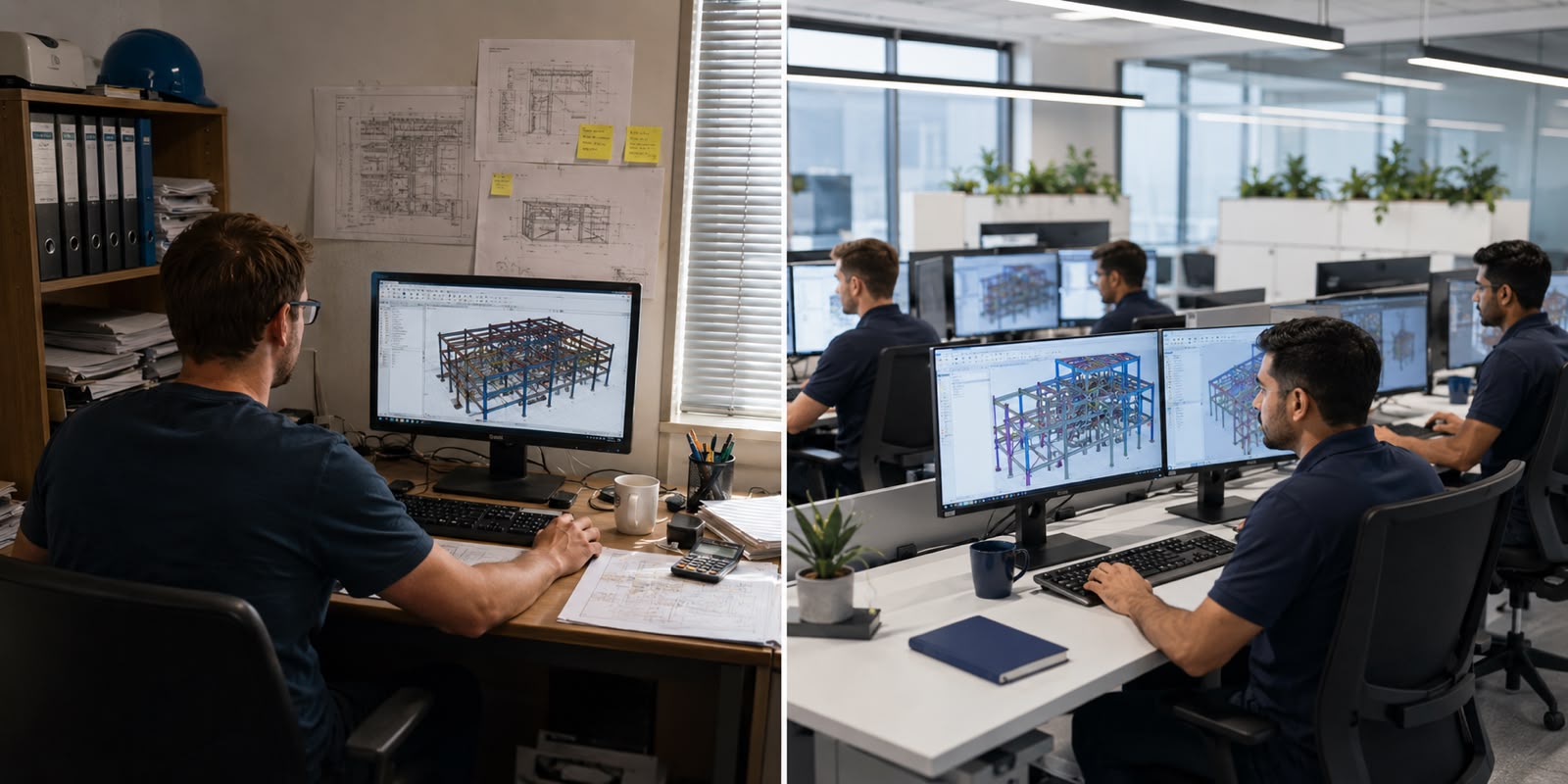
In-House Steel Detailing vs Outsourcing: Which is Right for Your Fab Shop?
This is one of the most common conversations I have with fabricators. You are running a busy shop, your current detailing arrangement is costing you either money or time — sometimes both — and you are wondering whether the grass is greener on the other side.
Having worked as a detailer and now running a detailing firm that supports fabricators across four countries, I have seen both models up close. Here is an honest, practical comparison to help you decide.
The Case for In-House Detailing
Some fabricators swear by in-house detailing and have strong reasons for it. When it works well, in-house detailing gives you:
- Immediate communication — your detailer is on the same floor as your estimator and project manager
- Deep familiarity with your shop's specific preferences, tolerances, and connection standards
- Full control over the workflow, the software, and the output format
- No dependency on an external firm's availability or capacity
For shops that run a steady, predictable volume of similar project types, in-house detailing can be efficient and cost-effective. If your team is experienced, your workflow is tight, and your volume justifies the overhead, in-house makes sense.
The Problems With In-House Detailing
But in-house detailing also comes with real costs that are easy to underestimate:
- Salary, benefits, and training for qualified Tekla or SDS/2 detailers — which can exceed $70,000-$90,000 per detailer annually in the US
- Software licensing — Tekla Structures licenses alone cost tens of thousands of dollars per seat per year
- Capacity gaps — when project volume spikes, your in-house team cannot scale overnight
- Turnover risk — losing one experienced detailer can stall your shop for weeks while you hire and train a replacement
- Limited exposure — in-house detailers often work on the same project types repeatedly, limiting their experience base
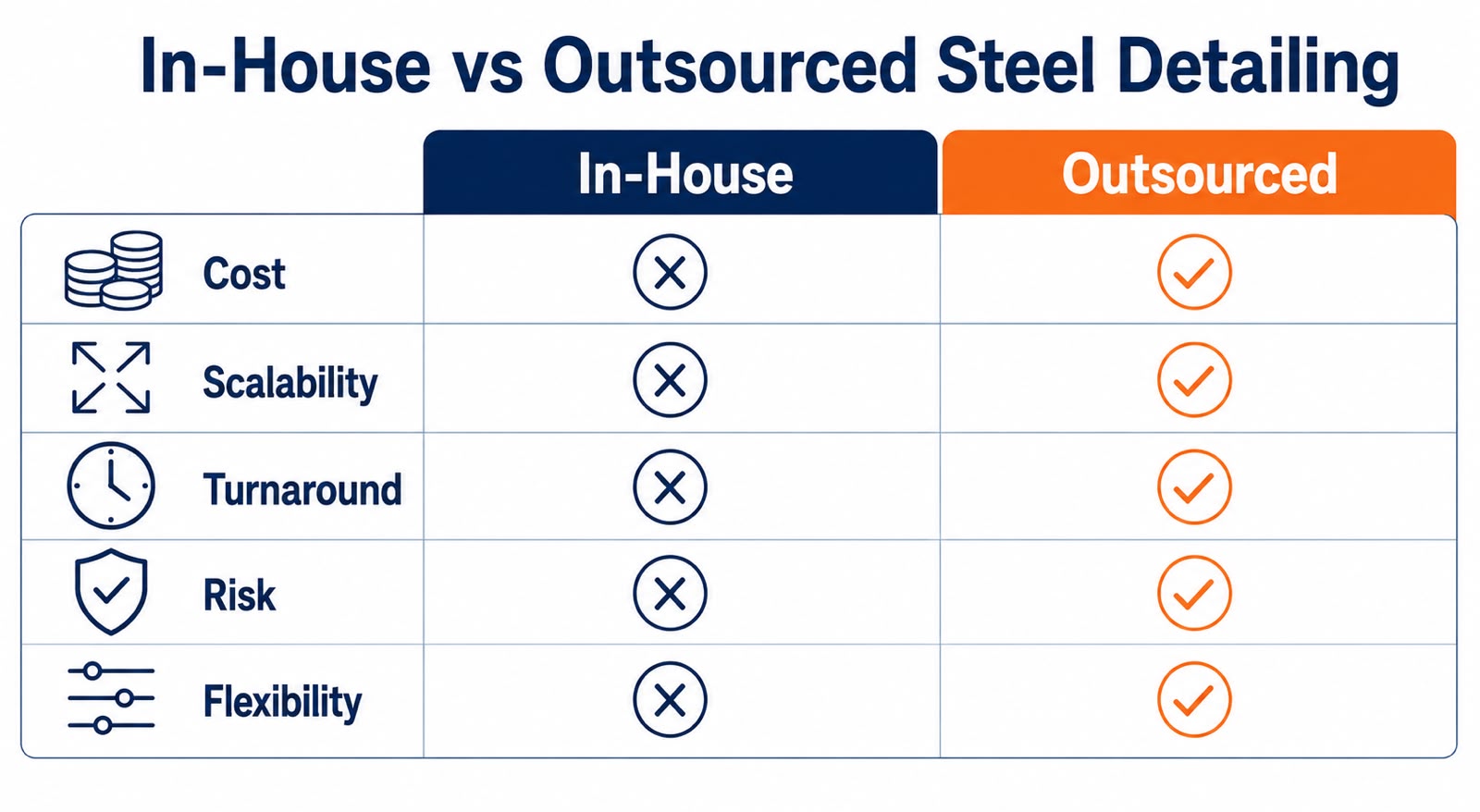
The hidden cost of in-house detailing is not the salary — it is the risk. One resignation, one extended sick leave, and your shop's detailing pipeline stops.
The Case for Outsourcing
Outsourcing steel detailing to an experienced offshore firm solves most of the problems above. Here is what fabricators tell me they value most:
- Cost — offshore detailing typically costs 40-60% less than equivalent in-house capacity
- Scalability — when a large project comes in, we scale the team. When it slows down, the overhead drops with it
- Breadth of experience — an offshore firm working across dozens of fabricators annually has exposure to a wider range of project types, standards, and complexity levels than most in-house teams
- No HR risk — turnover within our team does not affect your shop's output
- Established software and infrastructure — no capital outlay for you
The Problems With Outsourcing
I want to be balanced here because outsourcing is not without its challenges:
- Time zone difference requires structured communication and cannot support real-time walk-the-floor conversations
- The first project with any new partner takes longer while both sides align on preferences and format
- Quality varies enormously between offshore firms — choosing the wrong partner is a real risk
- You lose some control over the day-to-day workflow
These are real trade-offs. But they are also manageable with the right partner, a clear onboarding process, and defined communication protocols.
Which Model is Right for Your Shop?
Here is how I would think about it:
Choose in-house if: your volume is steady and predictable, your project types are consistent, and you can afford the full-time overhead without capacity risk.
Choose outsourcing if: your volume fluctuates, you want to reduce fixed overhead, you are growing and cannot commit to new headcount, or your in-house team is at capacity and you need support now.
Consider a hybrid model: many fabricators keep one in-house detailer for project management and client communication, and use an offshore firm for the drawing production volume. This gives you control with cost efficiency.
What the Numbers Tell Us
Fabricators who switch from fully in-house to a hybrid or fully outsourced model consistently report 30-50% reduction in detailing costs per project. More importantly, they report faster turnaround on drawing packages because the offshore team is working while their shop sleeps — a genuine production advantage when deadlines are tight.
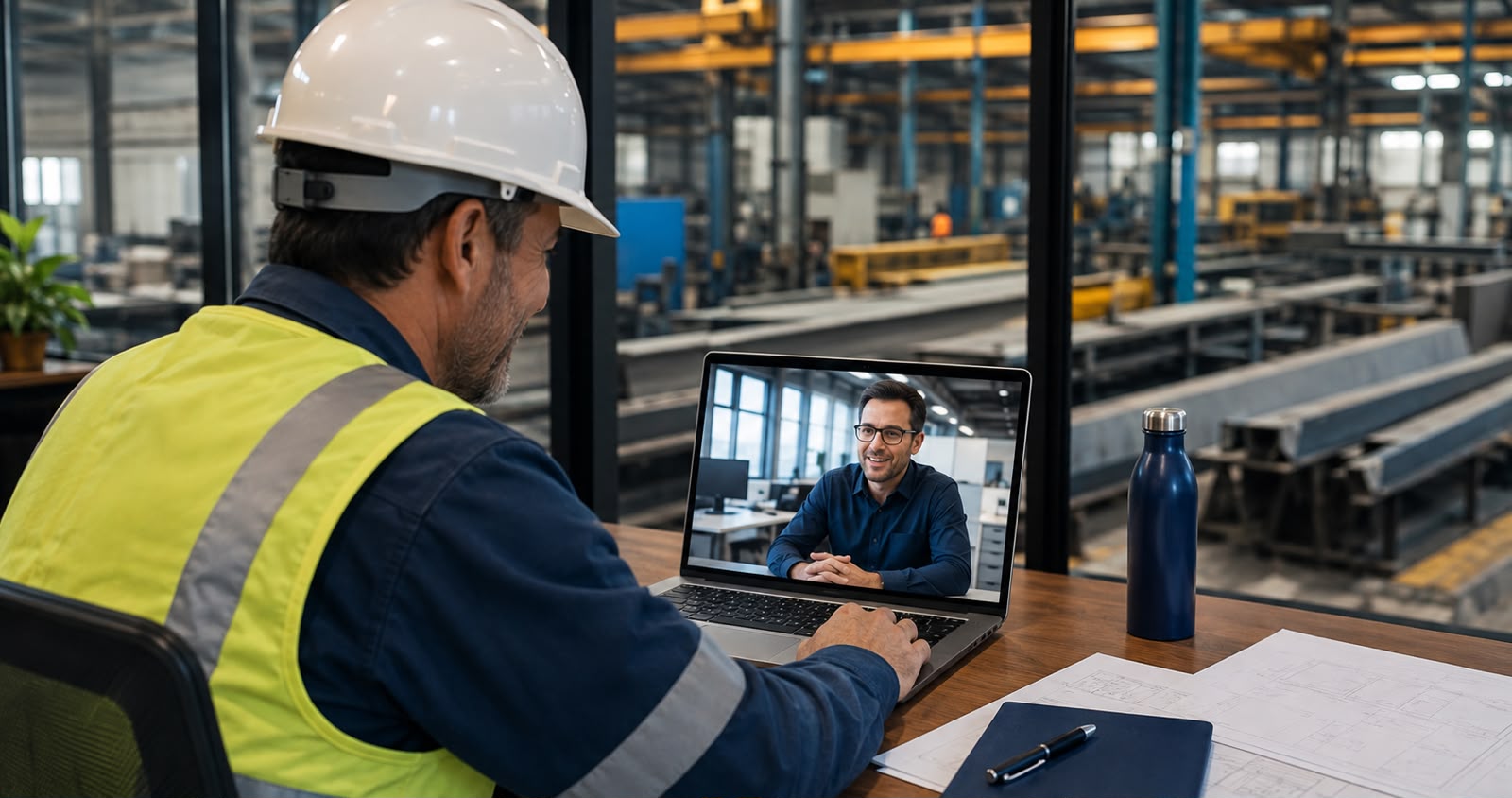
The right answer depends on your specific shop. But the fabricators I work with who have made the switch tell me the same thing: they wish they had done it sooner.
Matrix Steel Solutions supports US fabricators with AISC-compliant shop drawings, erection drawings, and Tekla models. Send your scope to info@matrixsteelsolutions.org and receive a detailed quote within 24 hours.