
Tekla Structures vs SDS/2: Which Is Better for Shop Drawings?
Tekla Structures vs SDS/2: Which Is Better for Shop Drawings?
Choosing the right steel detailing software can have a major impact on drawing quality, fabrication efficiency, project timelines, and overall profitability. Two names consistently dominate the structural steel detailing industry: Tekla Structures and SDS/2.
Both platforms are widely used by fabricators, detailers, engineers, and contractors to create fabrication-ready shop drawings. Both have strong reputations and proven track records. However, when comparing Tekla Structures vs SDS2 shop drawings, the differences become clear once you look at project complexity, workflow requirements, and detailing objectives.
If you're evaluating software for your fabrication shop or selecting a detailing partner, this guide will help you understand the strengths and limitations of each platform.
Understanding the Core Difference
At first glance, Tekla Structures and SDS/2 appear similar. Both create 3D structural models and generate shop drawings directly from those models.
The difference lies in how each platform approaches detailing.
Tekla Structures
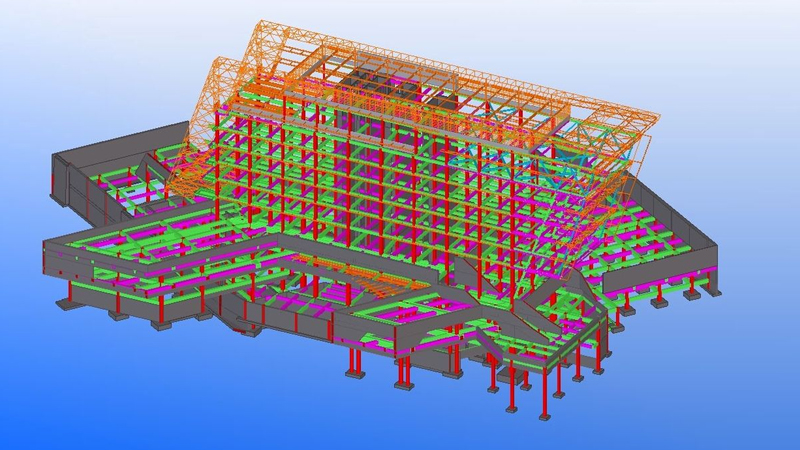
Developed by Trimble, Tekla Structures is a fully integrated Building Information Modeling (BIM) platform. Every beam, column, plate, weld, bolt, and connection is modeled as an intelligent object within a highly detailed 3D environment.
The model serves as the single source of truth, and all shop drawings, reports, CNC files, and erection drawings are generated from it.
SDS/2
SDS/2, developed by Design Data, focuses heavily on automation. Its strongest feature is automated connection design based on engineering rules and AISC standards.
Instead of manually modeling every connection, detailers can allow SDS/2 to automatically generate many common structural connections, significantly reducing detailing time on standard projects.
In simple terms:
-
Tekla prioritizes modeling flexibility and BIM integration.
-
SDS/2 prioritizes detailing speed through automation.
Tekla Structures Strengths
1. Superior Performance on Complex Structures
When projects involve unusual geometry, custom connections, industrial facilities, heavy plate work, or architecturally complex steel structures, Tekla excels.
Its modeling tools provide exceptional control over every element in the structure, allowing detailers to accurately represent even the most complicated designs.
Typical projects where Tekla shines include:
-
High-rise commercial buildings
-
Industrial plants
-
Power generation facilities
-
Stadiums and arenas
-
Complex architectural steelwork
-
Heavy structural steel projects
2. Industry-Leading BIM Capabilities
One of Tekla's biggest advantages is its BIM functionality.
The platform supports:
-
IFC model exports
-
Clash detection workflows
-
Coordination with architectural models
-
Integration with MEP systems
-
Multi-discipline project collaboration
For projects requiring BIM deliverables, Tekla is often the preferred solution.
3. Support for Multiple International Standards
Many fabrication companies operate across multiple regions and standards.
Tekla supports:
-
AISC (United States)
-
CISC (Canada)
-
AS/NZS (Australia and New Zealand)
-
BS standards (United Kingdom)
-
Eurocodes
This flexibility makes Tekla an excellent choice for firms serving international markets.
4. Strong Market Acceptance
Many engineering firms, consultants, and general contractors specifically request Tekla models for large-scale projects.
For fabricators seeking larger commercial and industrial opportunities, Tekla proficiency is increasingly viewed as a competitive advantage.
SDS/2 Strengths
1. Automated Connection Design
The biggest differentiator in the Tekla Structures vs SDS2 shop drawings debate is connection automation.
SDS/2 can automatically generate standard structural connections using built-in engineering logic and AISC-based rules.
This reduces manual detailing effort and accelerates project delivery.
Benefits include:
-
Faster modeling
-
Reduced repetitive work
-
Consistent connection design
-
Improved productivity on standard framing projects
2. Faster Turnaround for Conventional Buildings
For common commercial structures such as:
-
Warehouses
-
Distribution centers
-
Retail buildings
-
Office developments
SDS/2 often delivers faster detailing production due to its automation capabilities.
When projects involve repetitive framing conditions, automation can significantly shorten schedules.
3. Deep AISC Integration
SDS/2 was built with the U.S. fabrication market in mind.
The software integrates closely with:
-
AISC 303
-
AISC 360
-
Standard U.S. connection practices
For fabricators working exclusively within the United States, this specialization can be a major benefit.
4. Familiarity Among U.S. Detailers
Many experienced American steel detailers learned their trade using SDS/2.
As a result:
-
Training requirements are often lower
-
User adoption can be faster
-
Existing workflows may already be optimized around SDS/2
For shops with established SDS/2 teams, switching software may not deliver enough value to justify the transition.
Comparing Tekla Structures and SDS/2
| Feature | Tekla Structures | SDS/2 |
|---|---|---|
| Complex Structures | Excellent | Good |
| Automated Connections | Limited | Excellent |
| BIM Coordination | Industry-leading | Moderate |
| IFC Support | Excellent | Good |
| International Standards | Extensive | Primarily AISC |
| Learning Curve | Steeper | Easier |
| Modeling Flexibility | Very High | Moderate |
| Standard Building Speed | Good | Excellent |
| Offshore Availability | Widely Available | More Limited |
Which Software Produces Better Shop Drawings?
The answer depends on the project.
Choose Tekla Structures If:
-
Your projects involve complex geometry.
-
BIM coordination is required.
-
You work across multiple international standards.
-
Clients request detailed 3D models.
-
Long-term scalability is important.
Choose SDS/2 If:
-
Most projects follow standard U.S. framing practices.
-
Speed is the primary objective.
-
Your team already uses SDS/2.
-
Automated connection design provides significant productivity gains.
-
BIM deliverables are not a major project requirement.
Final Verdict
When comparing Tekla Structures vs SDS2 shop drawings, neither platform is universally better. Both are capable of producing highly accurate, fabrication-ready drawings.
For standard commercial steel projects in the United States, SDS/2 often provides faster production through automated connection design. For complex projects, BIM-intensive workflows, and international standards, Tekla Structures typically offers greater flexibility and long-term value.
Many large fabrication companies utilize both platforms, selecting the software that best matches the project's scope and requirements.
Matrix Steel Solutions uses Tekla Structures 2023 to deliver high-quality shop drawings and 3D models across AISC, CISC, AS, and BS standards. If you're looking for a reliable detailing partner for your next structural steel project, contact us at info@matrixsteelsolutions.org for a detailed quote within 24 hours.