
Why Steel Fabricators Keep Getting RFIs — And How to Stop Them

Why Steel Fabricators Keep Getting RFIs — And How to Stop Them
I have been in the structural steel detailing industry for over a decade. In that time, I have worked with fabricators across the USA, Canada, and Australia — and one complaint comes up more than any other: too many RFIs. Every week, more clarification requests. More back-and-forth with engineers. More delays waiting for answers before the shop floor can move.
If this sounds familiar, you are not alone. But here is the thing — most RFIs are preventable. After reviewing hundreds of projects, I can tell you with confidence that the vast majority of RFIs trace back to one place: the shop drawings.
The Problem: RFIs Are Slowing Your Fabrication Down
A Request for Information is supposed to be an exception — a rare occasion when something genuinely unclear needs clarification from the engineer or architect. But for many fabricators, RFIs have become routine. Some shops are managing 50, 60, even 100 RFIs on a single project.
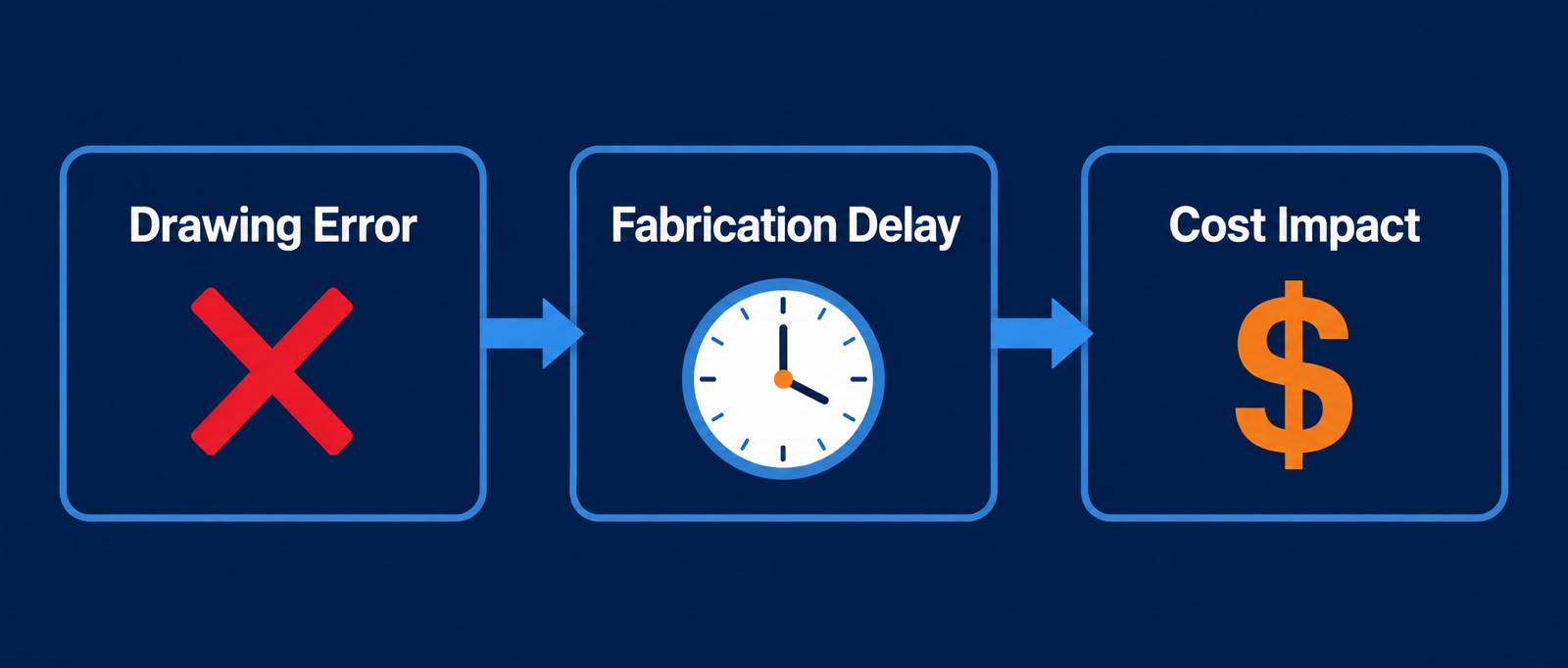
Every RFI costs you time. While you wait for an answer, the shop floor either stops or makes an assumption — and assumptions on the fabrication floor are how rework happens. RFIs delay your schedule, create tension with general contractors, and erode the margin on your project before steel is even cut.
Why It Keeps Happening
In my experience, RFIs come from a small number of root causes that repeat across project after project. The most common ones I see are:
- Shop drawings that were produced without fully reading the engineer's structural notes and specifications
- Connection details assumed by the detailer rather than designed to match the engineer's intent
- Missing or incorrect weld symbols that force the welder to stop and ask
- Anchor rod and base plate details that do not match the civil engineer's foundation drawings
- Drawings issued without an independent check — the same person who drew it approved it
- Poor communication between the detailer and the fabricator at the start of the project
Notice something? Every one of these is a detailing problem. The engineer's drawings are not the issue. The RFIs are being generated because the shop drawings did not accurately interpret and reflect the design documents.
Most RFIs are not a sign that the engineer left something unclear. They are a sign that the shop drawings did not ask the right questions before being issued.
How to Fix It
1. Start with a Complete Document Review
Before my team models a single beam, we review every document the client sends — structural drawings, specifications, geotechnical reports, architectural drawings, and any existing RFI logs. Detailing that begins without a full document review will always generate RFIs because the detailer is working with incomplete information.
2. Raise RFIs Before Modeling, Not After
There is a right time to raise an RFI — and it is before the shop drawings are produced, not after. If something in the design documents is unclear, ambiguous, or contradictory, we document it, raise it with the engineer upfront, and wait for clarification before we make an assumption. This single habit alone reduces our RFI count dramatically on every project.
3. Use a Two-Stage Quality Check
At Matrix Steel Solutions, every drawing is reviewed by a senior detailer who was not involved in producing it. That independent set of eyes catches the errors that the original detailer misses — because after staring at the same drawing for hours, you stop seeing the mistakes. A two-stage check is not optional. It is the difference between five RFIs and fifty.
4. Cross-Check Every Drawing Against the Design
Every connection detail, every member dimension, every weld symbol needs to be verified against the engineer's design drawings before the document is issued. This is time-consuming, but it is the only way to catch the discrepancies that generate RFIs. Shortcuts here always show up as problems later — on the shop floor, not in the office.
The Outcome: Fewer RFIs, Faster Fabrication, Better Margins
When we implemented these processes consistently across our projects, the results were measurable. Our fabricator clients regularly report near-zero RFIs on projects where we handle the detailing. One project manager in Texas told me his warehouse project — 150 shop drawings — came through with virtually no fabrication RFIs. His shop ran the job start to finish without a single significant delay waiting on clarification.
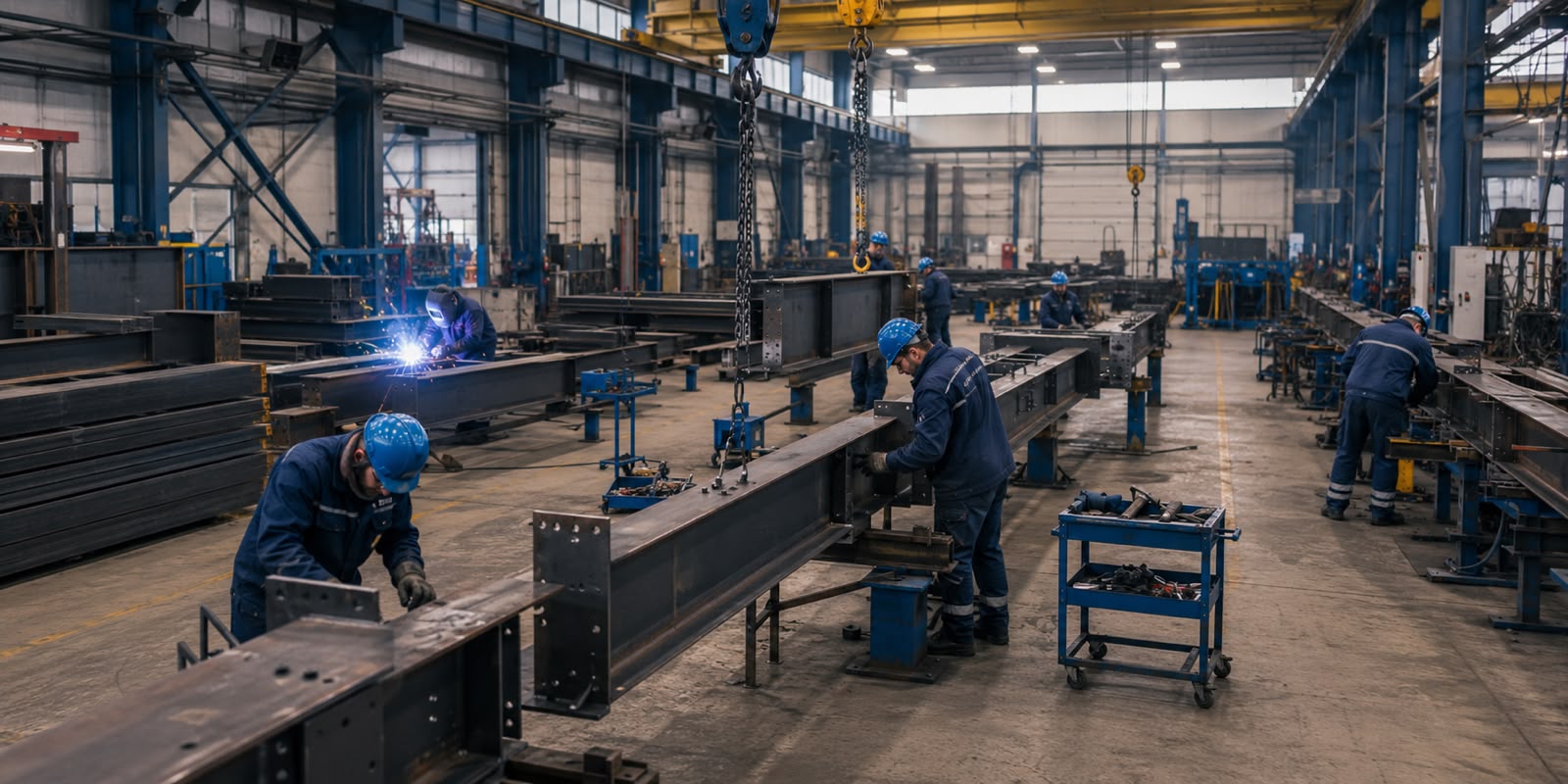
Fewer RFIs means faster shop throughput. Faster shop throughput means you hit your delivery schedule. Hitting your delivery schedule means your relationship with the GC stays intact — and they call you for the next project.
The next time your RFI count climbs on a project, do not accept it as normal. Ask where the drawings came from, how they were checked, and whether the detailer raised clarifications before modeling began. The answers will tell you exactly where the problem is.
At Matrix Steel Solutions we raise all RFIs before modeling begins and put every drawing through a two-stage independent check. Send us your next project at info@matrixsteelsolutions.org and get a quote within 24 hours.